How long does it take to build a small business website?
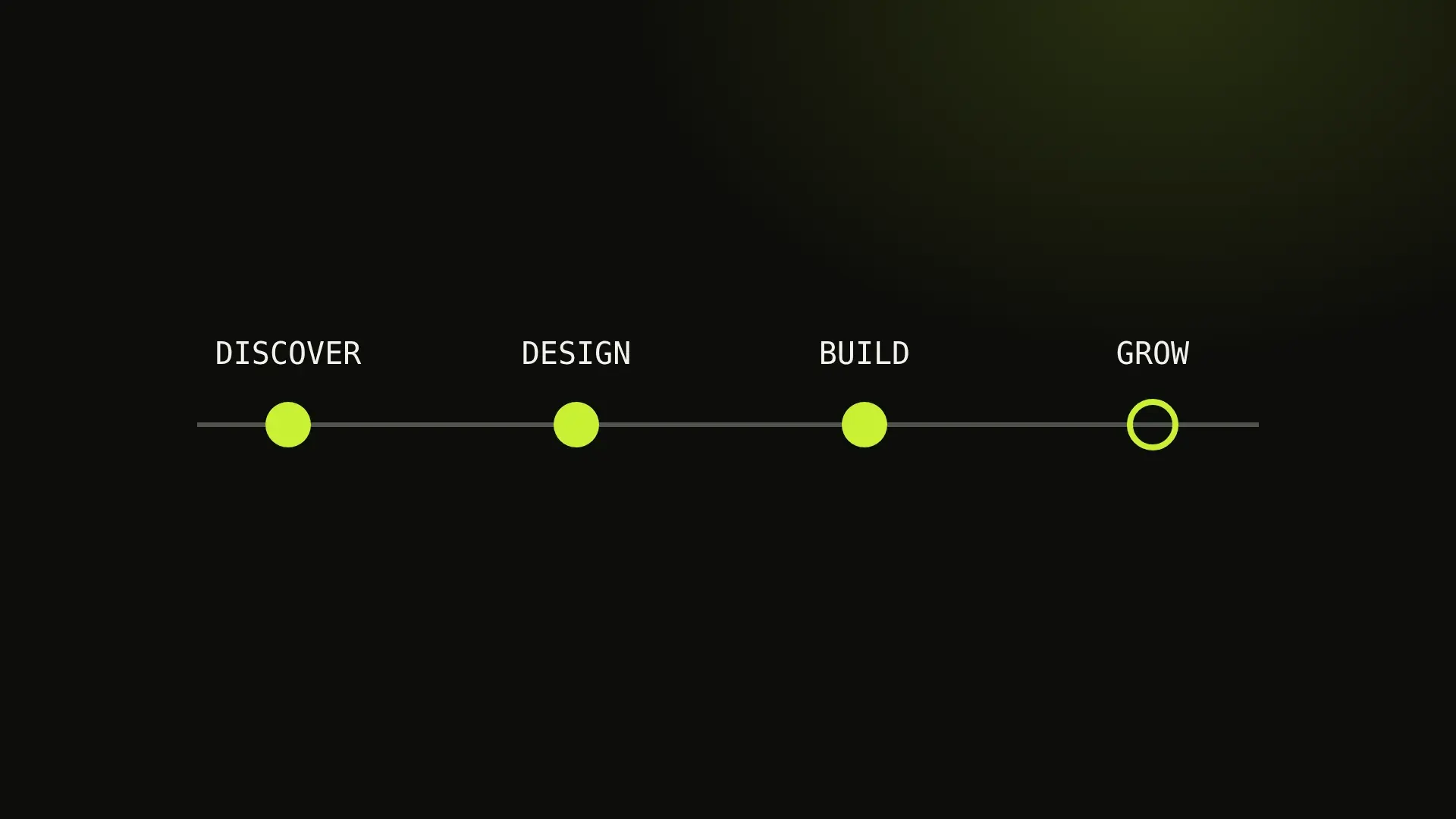
What actually happens when a studio builds your website, step by step: discover, design, build, launch and grow, how long each stage takes, and what slows it down.
“How long will it take?” is usually the second question a business owner asks about a new website, right after “how much?”. The honest answer is that a simple small business site can be live in one to two weeks, and larger builds take three to six. But the number matters less than understanding what happens in between, because most delays come from steps nobody explained at the start.
This is how we run a website project, stage by stage, with what you can expect at each one and what you need to bring. Other studios use different names, but a good process covers the same ground.
Stage 1: Discover (the first few days)
Before anyone opens a design tool, we need to understand the business: what you sell, who buys it, where they come from, and what you want the website to do. For most small businesses that is one clear action, such as calls, quote requests or bookings.
What happens: a short call or questionnaire, a look at your current site and competitors, and agreement on the pages and features.
What you bring: your goals, your logo and brand assets, photos of your work, and two or three websites you like (and why). Our guide on how to write a website brief shows what is worth writing down.
What you get: a written scope and a fixed quote before any work starts, so there are no surprise invoices later.
Stage 2: Design (a few days to a week)
Design is where the site is planned around the action you want visitors to take. It is not only about colours. It decides what someone sees first on a phone, where the phone number and quote button sit, and how each service page leads to contact.
What happens: we lay out the homepage and a key inner page, show them to you, and refine them. Content gets drafted or placed at the same time.
What you bring: clear, consolidated feedback from one person who can sign off. Five people sending separate comments is the single fastest way to add a week.
Stage 3: Build (one to two weeks for a starter site)
Once the design is agreed, it gets built. A simple site of a handful of pages typically takes one to two weeks. Bigger builds with many pages, online booking, payments, real-estate listings or integrations with tools such as Jobber, ServiceTitan or Stripe usually take three to six weeks.
What happens: pages are built for mobile first, forms are connected and tested, images are compressed, basic SEO is set up (titles, descriptions, structured data, sitemap), and analytics are connected. You get a private preview link to review the real site, not a picture of it.
Before launch we check: every form actually delivers (see why contact form leads go to spam), the site works on real phones, pages load quickly, and nothing is broken. Our before you launch checklist lists the details.
Launch (one day)
Launch day should be uneventful. The domain is pointed at the new site, old URLs are redirected so you keep any Google rankings you had, the sitemap is submitted to Google Search Console, and everything is tested again on the live address. You receive the logins: the domain, hosting and site are yours.
Stage 4: Grow (ongoing, optional)
A website is not finished on launch day. The first weeks show which pages people visit, where they drop off and which searches bring them in. Growth work can include SEO, Google or Meta ads, landing pages, new service pages and small conversion improvements.
We offer this as a monthly plan you can pause at any time. Some businesses need it; some only need the occasional update. Either is fine.
What makes website projects run late
In our experience, the build itself is rarely the slow part. The usual causes are:
- Content arriving late. Photos, service descriptions and team details. Agree a content deadline at the start.
- Too many reviewers. Nominate one person to give feedback and sign off.
- Scope creep. “Can we also add a shop?” halfway through. Write new ideas down for phase two, or agree a new price and date.
- Domain and hosting access. Find your domain registrar login early; it is often in an old employee’s email.
A realistic timeline for a starter site
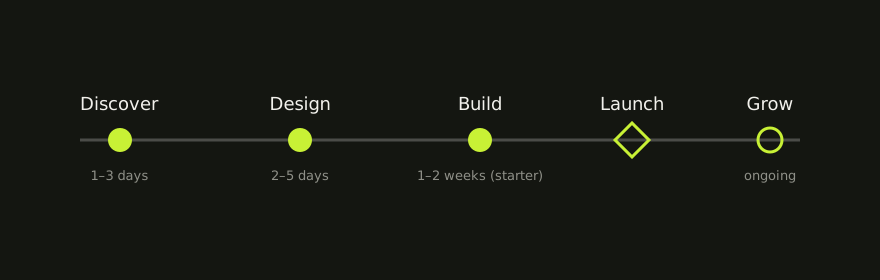
| Stage | Typical time | What you need to do |
|---|---|---|
| Discover | 1–3 days | Share goals, brand assets, photos, sites you like |
| Design | 2–5 days | Give one round of consolidated feedback |
| Build | 1–2 weeks | Review the preview link, send any final content |
| Launch | 1 day | Give domain access, approve go-live |
| Grow | Ongoing | Optional monthly plan |
Larger sites follow the same stages; the build stage simply takes longer.
Ready to plan yours?
See the details of our process on how we work, or check what a project might cost with the website cost estimator. Starter sites start from $600 with a fixed quote. If you already have a site and are not sure whether it needs rebuilding, ask for a free website check first. We work with US small businesses remotely, from the first call to launch.
Questions
For a simple site of a few pages with your content ready, about one to two weeks. Bigger builds with many pages, booking or payments, or custom features usually take three to six weeks. Waiting for content and feedback is the most common reason projects run longer.
Your goals for the site, your logo and brand colours, the services you want listed, photos of your work, and two or three websites you like. Written text helps, but a good studio can draft it from a short interview.
Usually because content arrives late, feedback rounds stretch out, or new features are added halfway through. A fixed scope agreed at the start, one person who signs off on your side, and a content deadline keep things on time.
The site should be tested, submitted to Google, connected to analytics and handed over with your logins. After that, many businesses keep a small monthly plan for updates, SEO and improvements; it should be optional and easy to pause.
For a small business website, a fixed quote against a written scope is usually better. You know the cost up front, and any extra work is agreed and priced before it starts.
Written by Ahsan “Max” Faraz, Maxverse Lab — Karachi
A fixed quote before we start. We reply within 24 hours.